A shared workspace for coding agents
Go AFK. Keep work moving.
Run coding agents in parallel. Come back to their work, their questions, and your next decision.
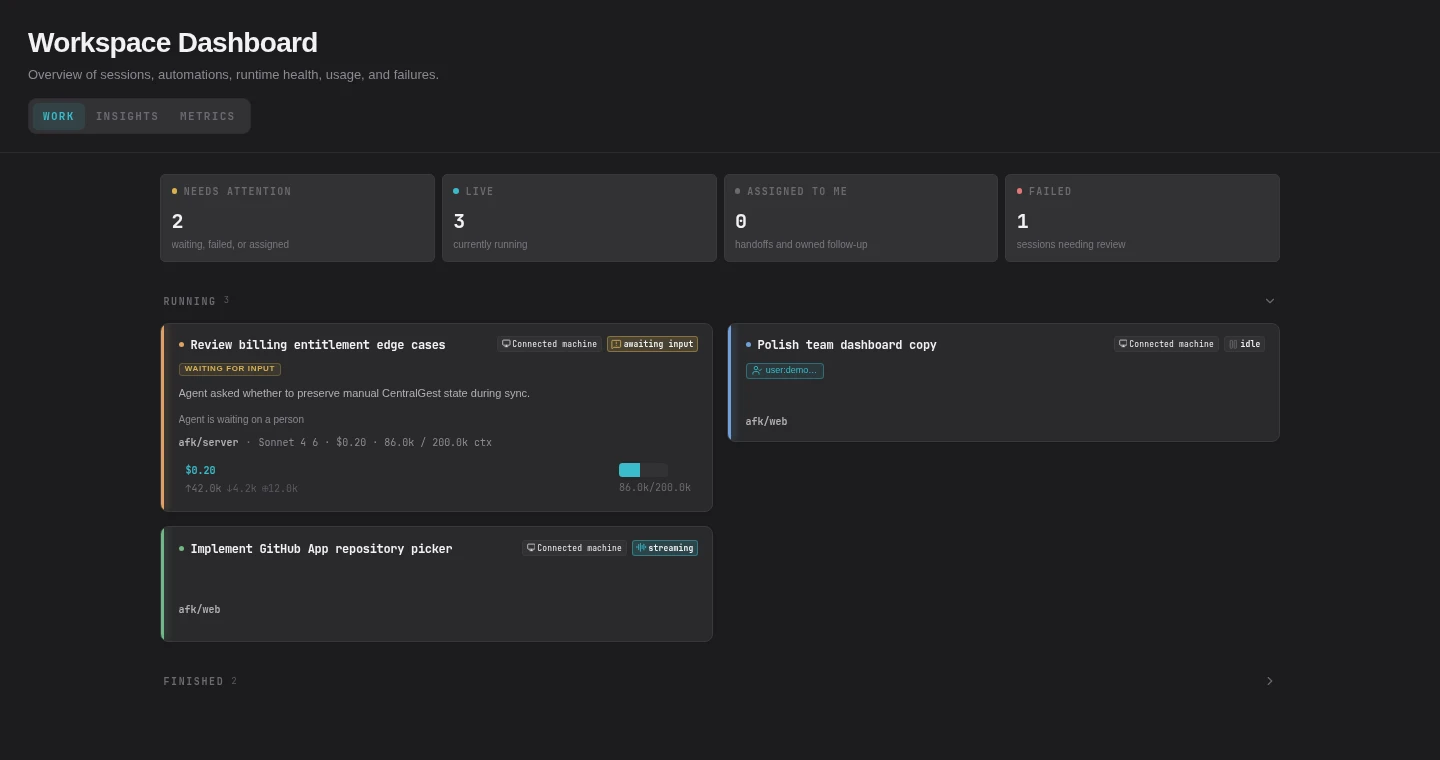
Parallel work. One place to look.
Find running sessions and work that needs attention without checking every agent individually.
Your judgment still matters.
Answer a question, review a plan, or reject an action. The decision stays with the work.
Explore the productLeave the tab. Not the context.
The session is where the work lives. Not in someone’s terminal.
Delegate, then get back to your work.
Run sessions side by side. Let agents split focused tasks among specialists and bring the findings back.
Pick up without the recap.
Prompts, plans, tool calls, and decisions stay with the session, ready for you or a teammate to continue.
No new model allegiance required.
Your models
Use your API keys, supported subscriptions, or local models. Change models without moving the work. Provider usage is billed by your provider. No token markup from AFK.
Your machines
Run on your machine, in Docker sessions, or on shared team infrastructure. Closing the browser doesn’t stop an agent. Its execution machine must stay awake and running.
Install AFKWhat’s waiting on your to-do list?
Give it to an agent. Start with 60 days free.
Start free See pricing